Short answer. The Vatican Museums grew out of a papal palace and a statue found in 1506, and St. Peter’s Basilica was rebuilt over more than a century. The Sistine Chapel was built in 1473 to 1481, Michelangelo painted its ceiling in 1508 to 1512, and the new Basilica was consecrated in 1626.
Tickets, guided tours and combined visits
Vatican Museums and Sistine Chapel: Entry Ticket
4.4· 49,797 reviews
from €38
Book tickets and tours →How did the popes end up in the Vatican?
In 1377 the popes came back from Avignon and settled in the Vatican. From 1450 Nicholas V wanted to turn the palace into the biggest in the world. Under Sixtus IV the Sistine Chapel was built between 1473 and 1481, and under Innocent VIII the Belvedere followed in 1486 to 1492. Then Bramante joined the Belvedere to the palace with a great courtyard, for Julius II.
Where do the Vatican Museums begin?
Many people say they began with the Laocoon. The statue was found in Rome on 14 January 1506. Julius II bought it and displayed it in the Vatican about a month later. The collection of ancient sculpture grew into the Pio-Clementino museum under Clement XIV and Pius VI, in the last decades of the 1700s.
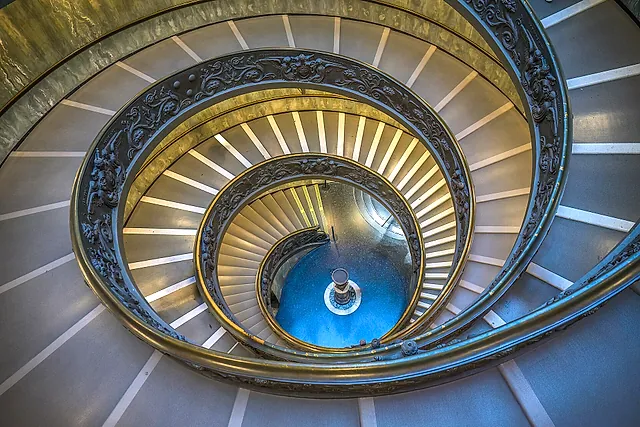
In 1797 the French took many works, and most came back in 1816. Pius VII and Gregory XVI added more: the Etruscan museum was founded by Gregory XVI in 1837. In 1932 the Picture Gallery opened, and the same year Giuseppe Momo designed the double spiral staircase. In 2024 the museums had about 6.8 million visitors.
What happened in the Sistine Chapel?
The chapel was built for Sixtus IV and used for the first time on 15 August 1483. Its walls were painted in the early 1480s by Perugino, Botticelli, Ghirlandaio, Cosimo Rosselli and others.
Michelangelo painted the ceiling between 10 May 1508 and 31 October 1512, for Julius II. He came back to the chapel years later to paint the Last Judgment on the altar wall, which was unveiled in 1541. In 1492 the first conclave held in the chapel elected Alexander VI. A long restoration of the frescoes was finished in 1994, and in early 2026 the surface of the Last Judgment was cleaned again.
How was St. Peter’s Basilica built?
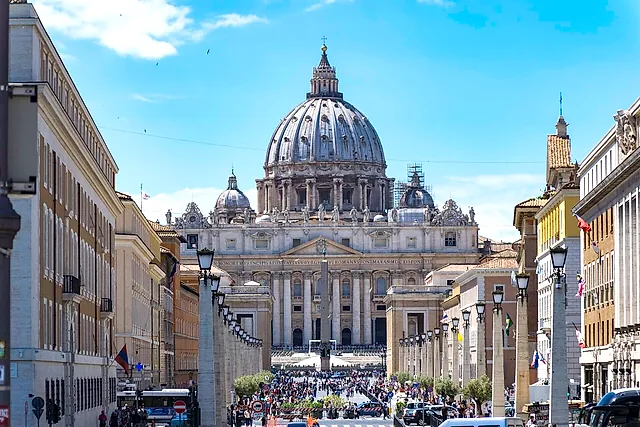
The first basilica, ordered by Constantine, was begun in the early 300s. In 1452 Nicholas V started to rebuild it with Rossellino, but the work stopped in 1455. In 1505 Julius II decided to pull it down, and the first stone of the new church, designed by Bramante, was laid on 18 April 1506.
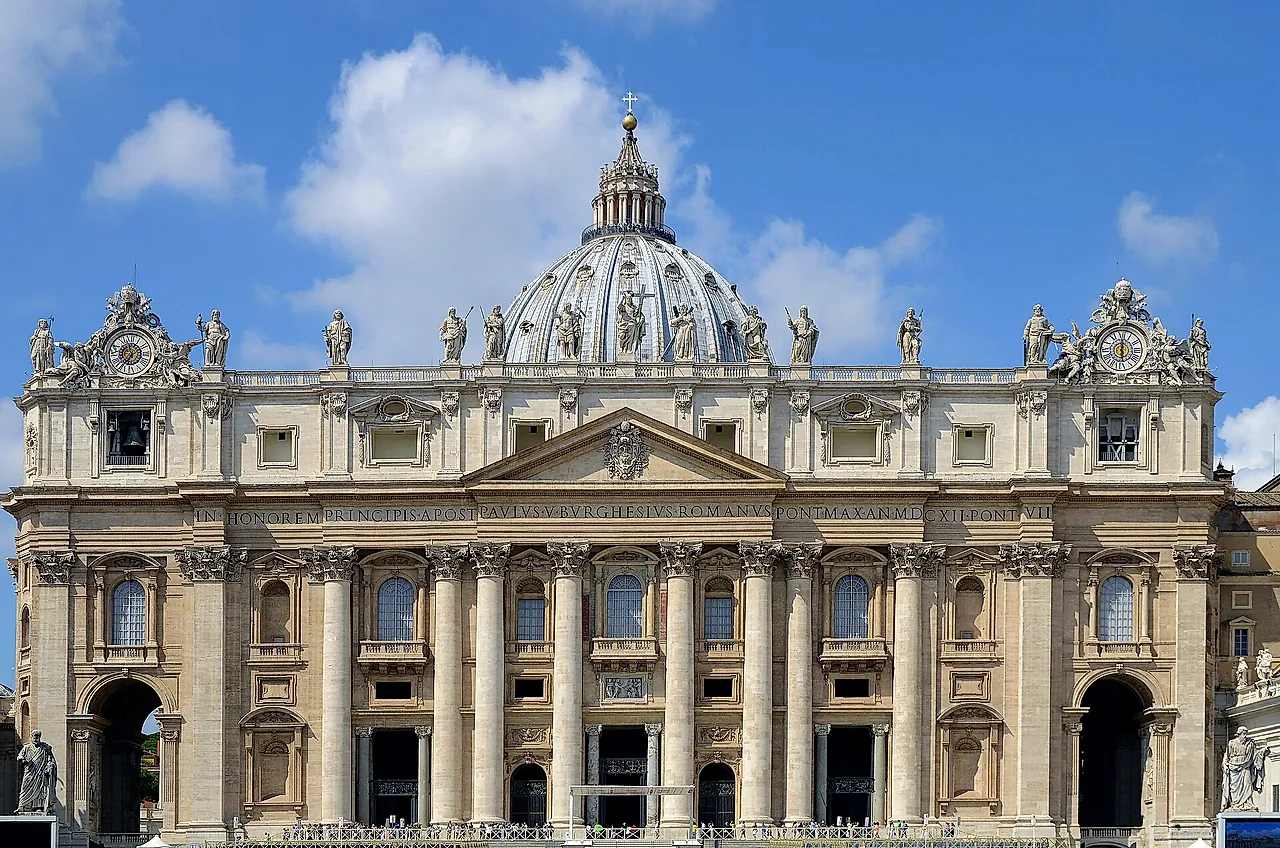
Michelangelo took over the direction in 1547. When he died in 1564 the drum of the dome was finished. Giacomo della Porta completed the dome between 1588 and 1590. Under Paul V the plan became a Latin cross, with a facade by Carlo Maderno carrying an inscription dated 1612. Urban VIII consecrated the new Basilica on 18 November 1626. Bernini took over from Maderna in 1629 and built the bronze baldachin in 1633.
And the square?
Bernini built the colonnade in the mid-1600s. The Egyptian obelisk in the middle was brought to Rome in antiquity and raised again in 1586, under Sixtus V, by Domenico Fontana.
What lies under the Basilica?
Excavations began in 1939 under Pius XII. On 23 December 1950 the discovery of what is believed to be the tomb of St. Peter was announced. Vatican City, with the Basilica, has been on the UNESCO World Heritage list since 1984.
Ready to go? See what to see, how to buy tickets and the hours and how to get there.